
Description
A high-side gate signal in a fast half bridge is hard to measure, because its reference node jumps with every switching edge. The Tektronix TIVP1 IsoVu probe targets that problem. It is an isolated voltage probe, meaning an optically isolated differential probe, with 1 GHz bandwidth and a 2 m fiber cable. Its interface then plugs into a TekVPI oscilloscope.
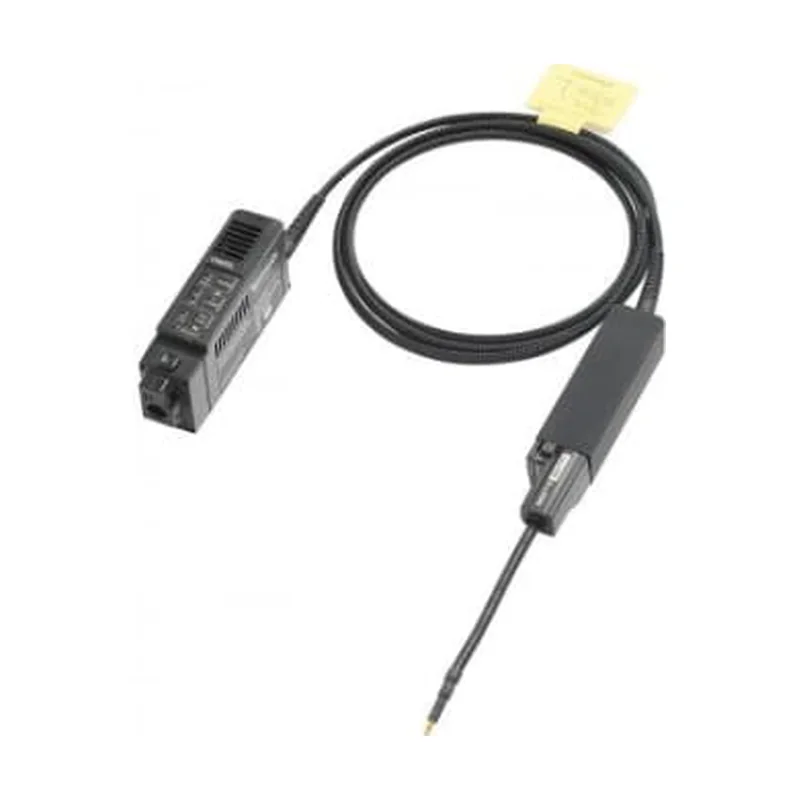
Why optical isolation matters
Instead of a copper path, the TIVP1 carries the signal over optical fiber from the sensor head to its interface. So the head can sit on a node that moves relative to earth. For the TIVP family, the manufacturer gives common-mode figures up to ±60 kV under its own test conditions. However, that value falls with frequency and safety derating, so check the manual for your case.
The 1 GHz, 2 m version
Lost in HCM lists six TIVP versions: 200 MHz, 500 MHz and 1 GHz, each with 2 m or 10 m of fiber. The TIVP1 pairs the top bandwidth with the short cable. Therefore, it suits a bench where the scope sits close to the board. If the scope must stand farther away, the TIVP1L gives the same bandwidth with 10 m of fiber.
Tips and input range
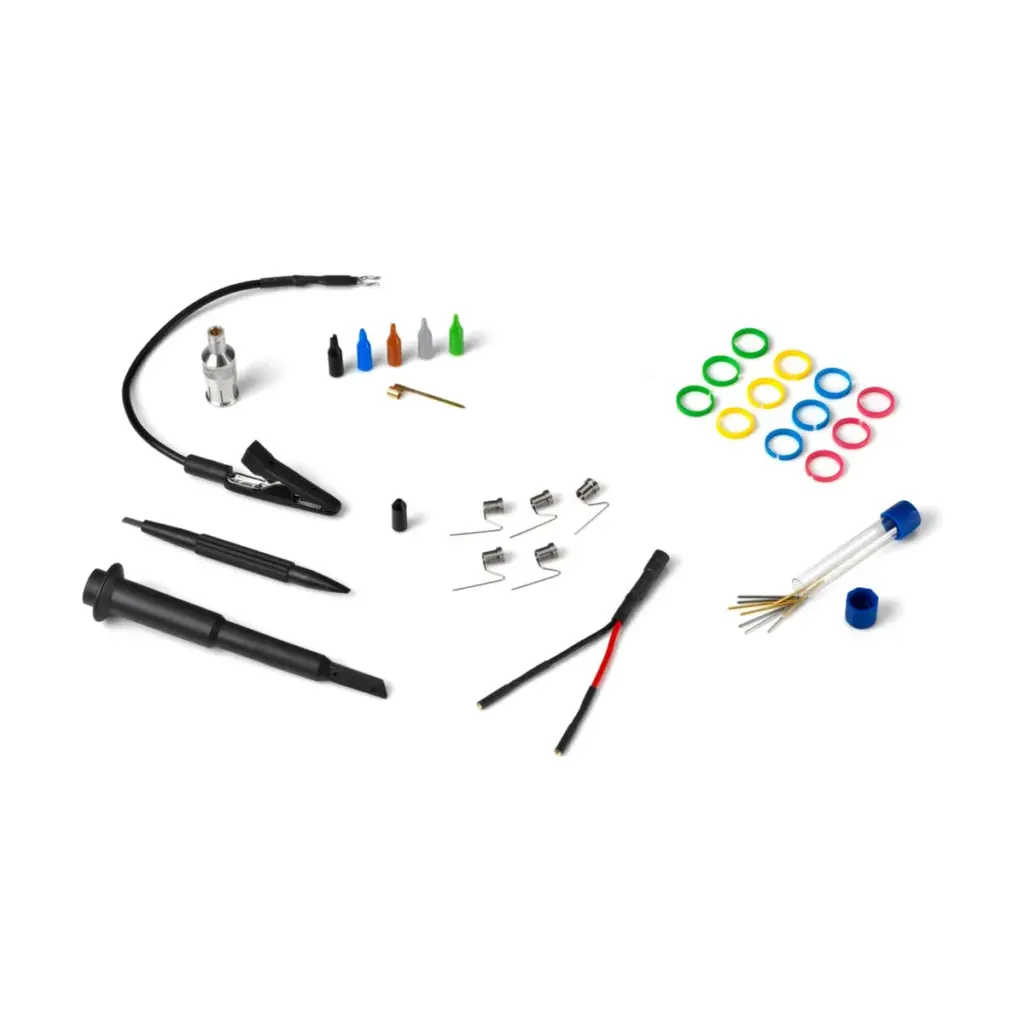
The sensor tip sets the differential range. Across supported tips, the family spans ±5 V to ±2500 V, but no single tip covers all of it. In fact, the ±2500 V figure applies only to a high-attenuation setup. The TIVPMX10X appears as the standard tip reference, so confirm which tips come in your kit.
Projects for the Tektronix TIVP1 IsoVu probe
For example, GaN power designers can view high-side gate drive and switch-node signals. Gate driver IC teams may also check timing between the high and low channels. Besides that, research groups that study fast converters get a direct look at floating nodes.
Rental or purchase
Lost in HCM rents and sells the TIVP1, and it arranges service on request. A rental fits a GaN design spin or a short debug push. For a lab that measures floating nodes every week, buying may pay off. To request a TIVP1 quote from Lost in HCM, share the scope model, signal bandwidth, and differential and common-mode voltage. You can also check other oscilloscope probes, go to Tektronix, or contact SMK Vietnam. Follow the manufacturer’s manual and ratings whenever you use the Tektronix TIVP1 IsoVu probe.
TIVP1 questions
What does the TIVP1 plug into?
A TekVPI oscilloscope. Check that your scope model and firmware support it.
Should I pick the TIVP1 or the TIVP1L?
Both offer 1 GHz. Pick the TIVP1 for a compact bench with 2 m of fiber, or the TIVP1L for 10 m.
Does every tip reach ±2500 V?
No. That figure belongs to a high-attenuation configuration, and lower-range tips start at ±5 V.








Reviews
There are no reviews yet.