
Description
Most mid-range digital boards never need the very top of a probe family. The Tektronix TAP2500 active probe gives 2.5 GHz of bandwidth, which sits between the TAP1500 and TAP4000 listings. In plain terms, it is an active single-ended voltage probe: a buffer amplifier in the head reads one test point against ground and passes the result to a TekVPI oscilloscope. Lost in HCM supplies it for rental or sale in Vietnam and also arranges service on request.
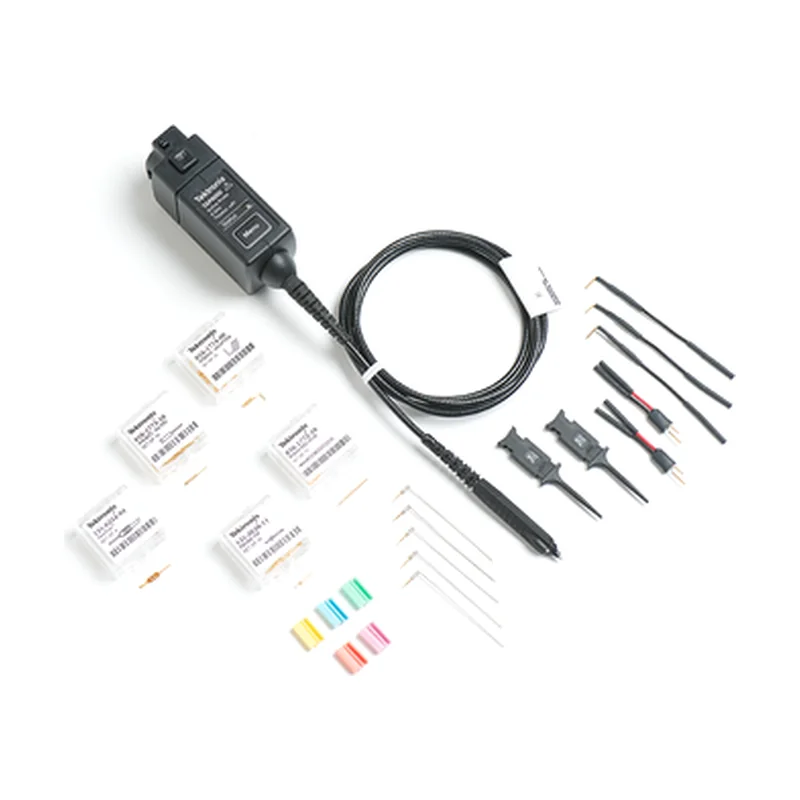
The middle step of the TAP range
Each TAP listing trades speed against input behavior in its own way. For instance, the TAP1500 offers a 1 MΩ input and a ±8 V linear range at 1.5 GHz. By contrast, this model lists 40 kΩ, 0.8 pF or less, and a ±4 V dynamic range. The TAP4000 shares those input figures but reaches 4 GHz. So the TAP2500 suits teams that want the low-capacitance tip without paying for the fastest model.
Tektronix TAP2500 active probe data
| Parameter | Listed value |
|---|---|
| Bandwidth | 2.5 GHz |
| Scope interface | TekVPI |
| Attenuation | 10X |
| Input resistance | 40 kΩ |
| Input capacitance | 0.8 pF max |
| Input dynamic range | ±4 V |
| DC offset range | ±10 V |
| Nondestructive limit | ±30 V DC plus peak AC |
Signals it handles well
Think of embedded controllers, FPGA I/O, fast SPI and similar serial lines, and clock trees on consumer or automotive boards. Here, the edges are quick enough to need an active probe. Yet they rarely call for 4 GHz. Low-voltage logic also fits well inside the ±4 V window. In addition, a design team can share one TAP2500 across many boards.
Setting it up on the scope
Plug the probe into a TekVPI input and wait for the scope to detect it. Next, check that the scale reads 10X and that offset control works. Then dial offset to center the signal before you zoom in. Keep the ground lead short, because extra wire shows up as ringing on fast edges. Lastly, remember that a 40 kΩ tip may pull a weak bias node slightly.
Getting a TAP2500 for your lab
Many teams rent it for a design validation phase or a short debug push, then buy once the need becomes steady. To begin, ask Lost in HCM for a TAP2500 quote and mention your scope model, signal speed, voltage levels and tips. You can also compare other oscilloscope probes, see tek.com for the datasheet, or contact SMK Vietnam about the Tektronix TAP2500 active probe.
TAP2500 buying questions
Is 2.5 GHz enough for my design?
Look at the fastest edge you must capture, then allow some headroom. If edges are very sharp, step up to the TAP4000 listing instead.
Which accessories come with it?
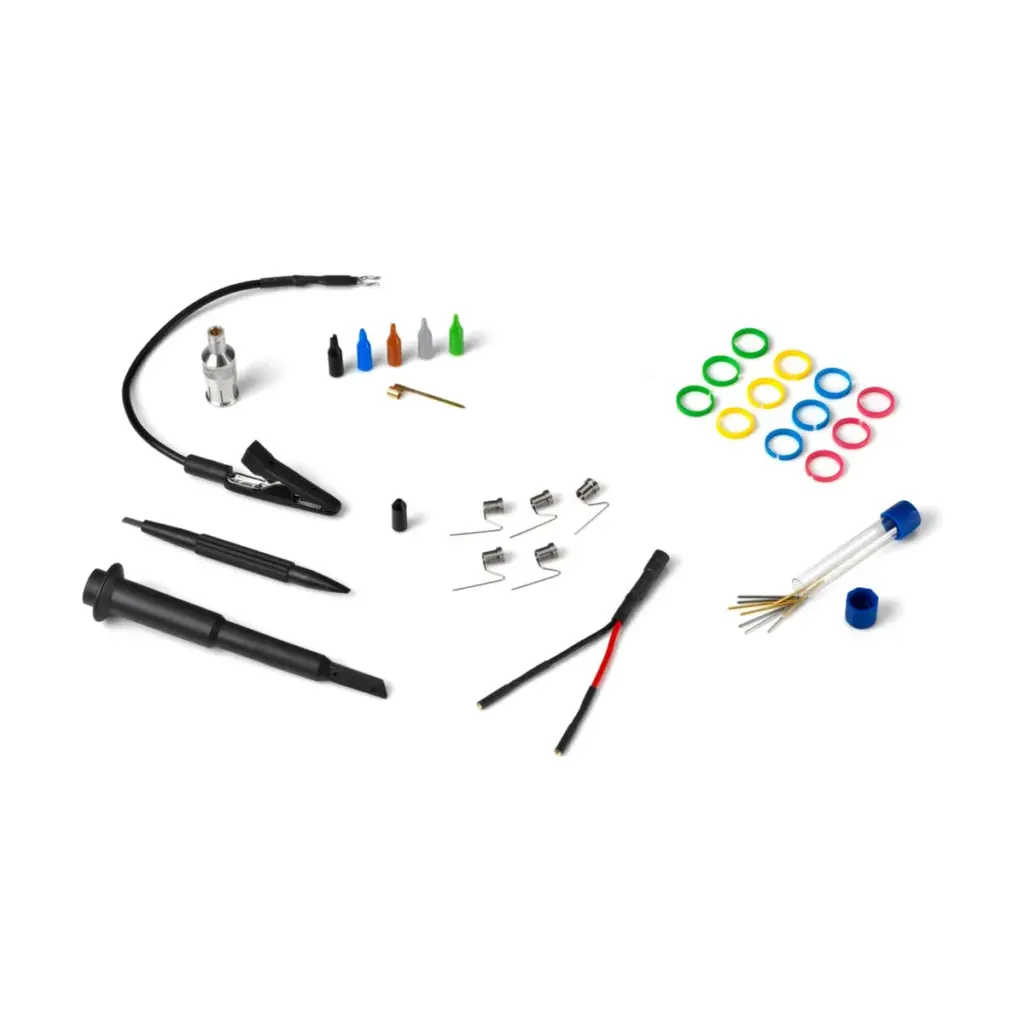
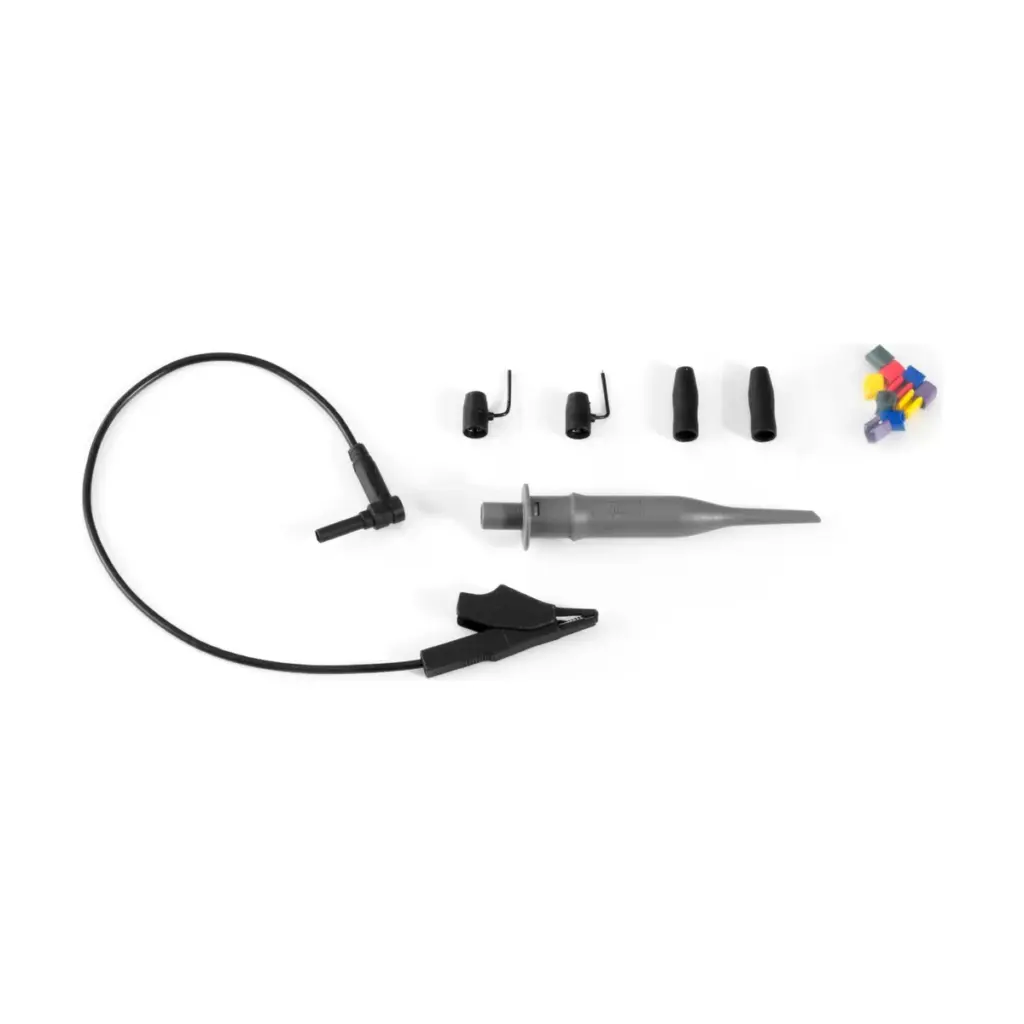
The listing photo is a family reference. So ask Lost in HCM to confirm the tips and leads it supplies.
Can I measure 5 V logic?
Offset is the key. Center the trace on the middle of the swing, so the signal sits inside the ±4 V window, and check the setup against the Tektronix manual.








Reviews
There are no reviews yet.