
Description
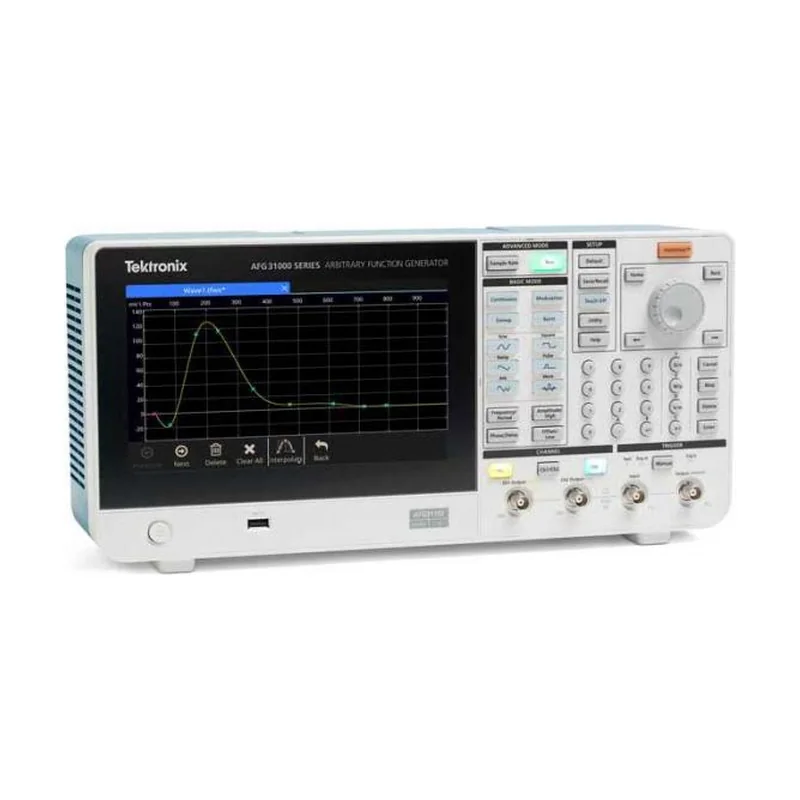
Some experiments need a stimulus and a second signal that relates to it. The Tektronix AFG31252 function generator supplies both from two outputs, each reaching 250 MHz sine. Lost in HCM offers it for rental or sale, with service on request.
What two outputs change
A second channel lets the Tektronix AFG31252 function generator feed a circuit input and a related reference at the same time. Check the synchronization and phase settings that your experiment requires before you start. As a result, the timing between the two signals becomes part of your test plan, not an afterthought.
Core numbers for the Tektronix AFG31252 function generator
- Two output channels with a 50 Ω output impedance.
- Continuous sine from 1 μHz to 250 MHz.
- Sample rate up to 2 GS/s, 14-bit vertical resolution.
- Advanced-mode memory of 16 Mpoints per channel as standard.
- A 128 Mpoints per channel upgrade, only when the quote lists it.
- Control by a 9-inch touchscreen and front-panel keys.
Setting up a two-signal test
Run CH1 through a suitable coaxial cable into the circuit input. Then probe the circuit output with a rated probe and view it on an oscilloscope. Next, decide what the second channel should do, for example, drive a gate, a clock or a bias signal. Choose waveform, load, amplitude and offset for each channel before you enable either one.
Amplitude limits vary with frequency and waveform. So check the datasheet for the exact conditions of your test.
Sequencing and memory
Advanced mode brings sequencing. Also, list sequencing and any memory extension in your request, because the quote covers only what you name. Otherwise you get the standard 16 Mpoints per channel.
Quote route through Lost in HCM
SMK Vietnam lists this generator for Lost in HCM. To price a rental or a purchase, request a quote from Lost in HCM with your signals, accessories and delivery site. You can compare it with other waveform and function generators, check the Tektronix website for series material, or contact SMK Vietnam.
Two-channel generator questions
What is the top sine frequency?
The model generates sine waves up to 250 MHz. Amplitude limits still depend on frequency and waveform, so check the datasheet.
Do I need to ask for synchronization?
Plan for it. State the synchronization and phase behavior your experiment needs when you request the quote.
Does the quote include extra memory?
Only if you name it. The 128 Mpoints upgrade is not included unless specified.








Reviews
There are no reviews yet.