
Description
A receiver test is only as honest as the signal that drives it, so the source matters. The Keysight E8663D signal generator belongs to the PSG family of RF analog sources, and it covers 100 kHz to 9 GHz. Therefore, engineers choose this class of instrument when low-noise RF and microwave signals matter.
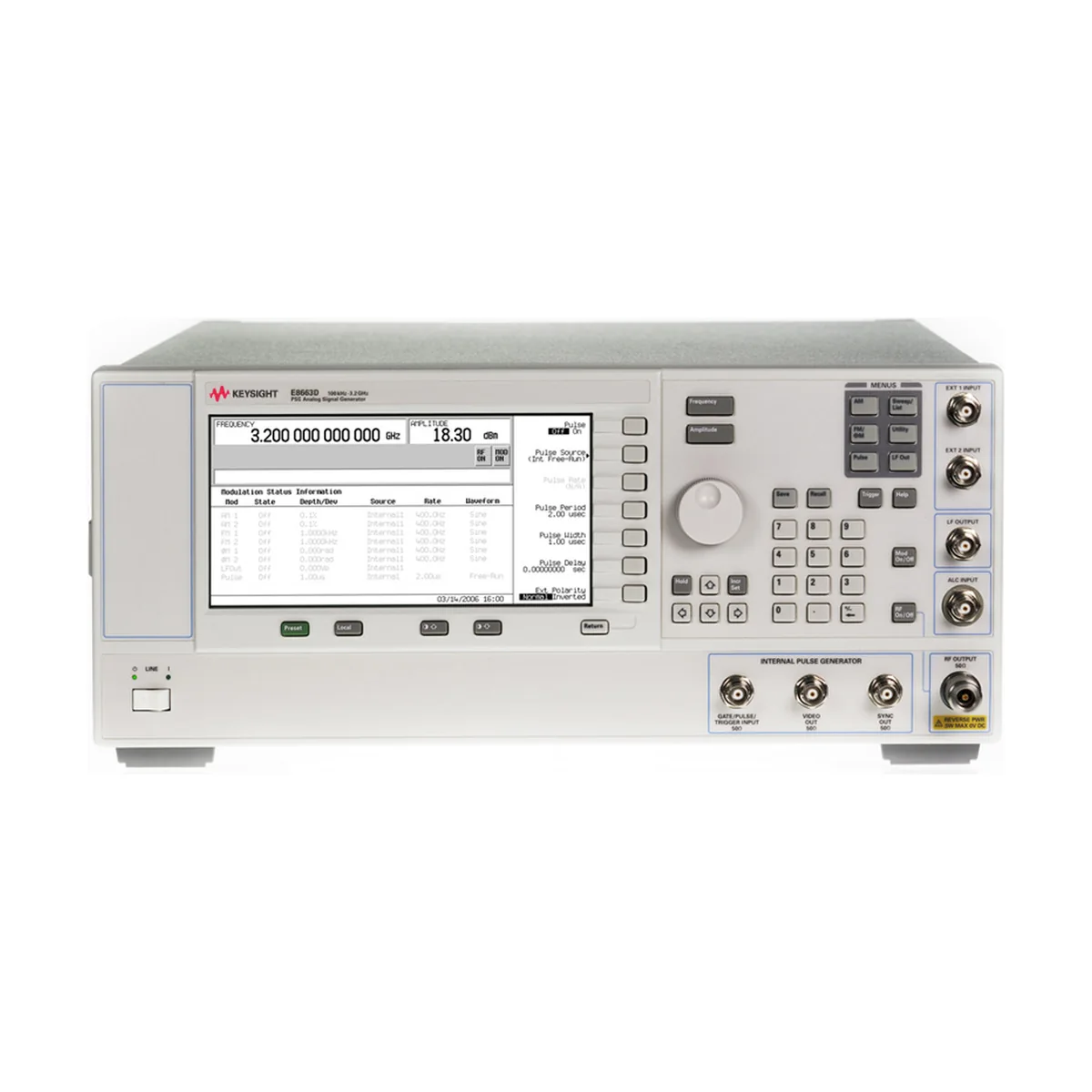
A clean source for RF and microwave work
First, an analog generator creates a stable carrier at a frequency you set. You can then check a receiver, an amplifier or a filter against a known input. The wide span here lets one instrument serve low-frequency radio tests as well as microwave stages. As a result, a lab can retire several narrower sources.
Typical uses for a Keysight E8663D signal generator
- Receiver sensitivity and selectivity checks.
- Stimulus for parts such as amplifiers, mixers and filters.
- A reference carrier while you tune a radio design.
- Checking other bench sources, because a reference helps spot drift.
Options decide the final feature set
However, the base model is only the start. The installed frequency, modulation and phase-noise options change what the unit can do. Connectivity can also differ. Therefore, write down the features you need before you ask for a quote. Then Lost in HCM will match them against the unit it offers.
Also plan the signal path. Use cables rated for your top frequency, and keep connectors clean. Otherwise cheap adapters can hide the very noise you want to measure.
Hire for a project, buy for daily use
Renting the Keysight E8663D signal generator suits a radio design phase, a university course or a field trial that ends in a few months. Buying makes sense instead when the source runs on a bench every week. Lost in HCM prepares both quotes, while SMK Vietnam lists the item. Begin with a request: request a quote from Lost in HCM with your frequency band, power level and dates. You can also browse more signal generator rentals, see the Keysight site, or contact SMK Vietnam.
E8663D questions
What frequency range does the E8663D cover?
It covers 100 kHz to 9 GHz. That span reaches from low-frequency radio into the microwave band.
Does the E8663D include modulation?
It is an analog RF signal generator. However, modulation, phase-noise and connectivity options vary by unit, so Lost in HCM confirms what the quoted unit carries.
Why does phase noise matter when I choose a generator?
Because noise on the source limits what you can measure on the receiver side, a low-noise source keeps your own test signal from hiding the faults you want to find.







Reviews
There are no reviews yet.