
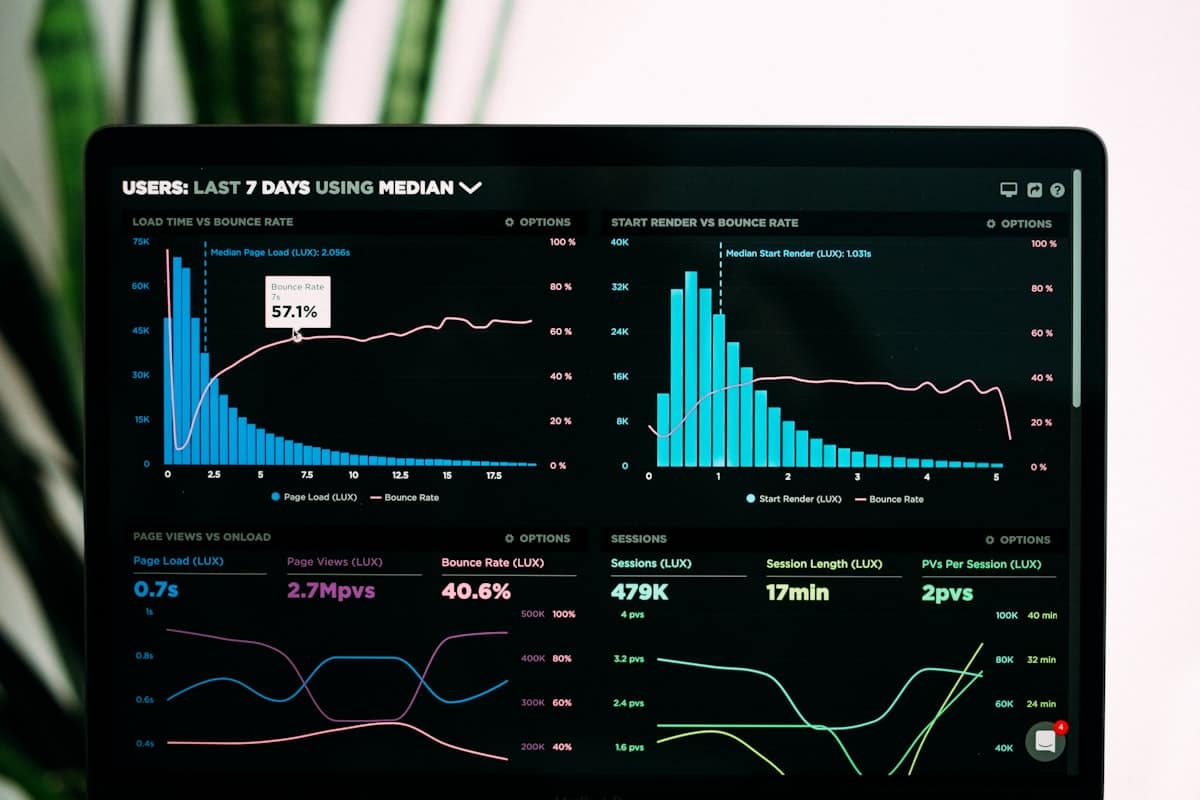
Most Vietnamese marketing teams are drowning in dashboards and starving for decisions. GA4 has more reports than anyone opens, Looker Studio charts get built once and abandoned, and the monthly report is still a marketer copying numbers into slides at 11pm. After a decade in SEO, content, and AI-assisted marketing, I can tell you the fix is rarely “another dashboard” — it’s using AI to turn the data you already have into plain-language answers a busy founder can act on. Here is exactly how to do that in the Vietnam market.
Quick answer
AI marketing analytics in Vietnam means connecting your data sources (GA4, Google/Facebook Ads, Shopee, TikTok, a CRM) into one place, then using AI — either the natural-language layer inside GA4 and Looker Studio, or an assistant like ChatGPT, Claude or Gemini connected to your data — to ask questions in Vietnamese or English and get charts, summaries and recommendations back in seconds. It replaces manual copy-paste reporting, not the marketer’s judgment. A small team can stand up an AI-assisted reporting workflow in about one to two weeks and save 8–15 hours of reporting work every month.
- The bottleneck is not data collection — it’s turning data into a decision. AI closes that last mile.
- Start with GA4 + Looker Studio as your foundation, then add a natural-language layer on top.
- Ask AI for the “so what,” not just the “what” — a good prompt returns the number, the cause, and the next action.
- Vietnam-specific channels (Zalo, Shopee, TikTok Shop) need custom data plumbing; plan for it.
- Keep a human in the loop for attribution judgment, privacy (PDPL), and any number that goes to a client or board.
Why is marketing reporting still broken for most Vietnamese teams?
Walk into almost any SME or agency in Ho Chi Minh City or Hanoi and you’ll see the same pattern. The data exists — often too much of it. What’s missing is the connective tissue. Facebook Ads Manager lives in one tab, GA4 in another, Shopee Seller Center in a third, a Google Sheet of Zalo broadcast results in a fourth. Once a month someone stitches it together by hand.
That manual process has three failure modes I see constantly: it’s slow (a full monthly report eats a working day), it’s error-prone (copy-paste mistakes and stale date ranges), and it’s shallow — by the time the numbers are assembled, nobody has energy left to ask why they moved. AI doesn’t magically unify your data, but it dramatically compresses the last two problems: the assembling and the interpreting.
What does an AI-assisted analytics stack look like?
Think of it in three layers: collect, visualize, and interrogate. GA4 and your ad platforms collect. Looker Studio visualizes. AI is the interrogation layer that sits on top and answers questions in human language. Here’s how each role plays out in practice.
GA4 (the foundation)
Its built-in “Explore” + AI insights already flags anomalies and answers typed questions like “which channel drove the most conversions last week.” Free, and every VN team should have it configured properly with events and conversions.
Looker Studio (the view)
Free, connects to GA4, Google/Facebook Ads and Sheets, and builds the always-on dashboard a client or boss can open anytime. Its Gemini integration can now generate charts and written summaries from a prompt.
AI assistant (the analyst)
ChatGPT, Claude or Gemini — paste in a CSV export or connect data, and ask for the story: what changed, why, and what to do. This is where a marketer without SQL suddenly reports like a data analyst.
How does natural-language reporting actually work?
“Natural-language reporting” sounds like a buzzword, but it’s concrete. Instead of building a chart, you type a question and get an answer. Two flavours matter for Vietnam:
1. Native NL inside your tools. GA4’s search bar and Looker Studio’s Gemini panel let you type “so sánh doanh thu kênh Facebook và Google tháng này so với tháng trước” (compare Facebook vs Google revenue this month vs last) and get a chart back. It understands Vietnamese reasonably well, though English prompts are still more reliable for complex asks.
2. Export-and-ask. The more flexible pattern: export a GA4 or ad-platform CSV, drop it into ChatGPT (Advanced Data Analysis), Claude or Gemini, and prompt it like a junior analyst. This works today with zero setup and handles the messy multi-channel reality of Vietnamese e-commerce far better than any single native tool.
“The skill that separates a good marketer from a great one in 2026 isn’t building dashboards — it’s asking the right question of the data. AI makes the asking cheap, so ask better questions.”
Manual reporting vs AI-assisted reporting
| Task | Manual (old way) | AI-assisted |
|---|---|---|
| Monthly report | ⚠ ~1 working day, copy-paste | ✓ ~1 hour, AI drafts narrative |
| “Why did sales drop?” | ⚠ Hours of pivot tables | ✓ Ask; get ranked causes |
| Vietnamese summary | ⚠ Rewrite by hand | ✓ Bilingual in one prompt |
| Anomaly spotting | ⚠ Often missed | ✓ Auto-flagged in GA4 |
| Judgment & strategy | ✓ Human strength | ✓ Keep human-led |
A 5-step workflow to build AI reporting in two weeks
Confirm conversions, UTM tagging on every Facebook/Zalo/TikTok link, and e-commerce events are firing. AI on bad data just produces confident nonsense faster.
Connect GA4 + ad accounts + a Google Sheet for Shopee/Zalo numbers. One page, the 8–10 metrics that matter. This becomes your single source of truth.
Write one master prompt: “You are my marketing analyst. Here is a CSV. Give me: top 3 wins, top 3 problems with likely causes, and 3 recommended actions, in Vietnamese and English.” Save it.
Every Monday: export the week’s data, run your prompt, skim the AI’s narrative, correct anything wrong, and send. Fifteen minutes instead of half a day.
Once the loop is stable, use Make or n8n to auto-export and pre-fill the prompt. See our marketing automation guide for the wiring.
Where to keep a human firmly in the loop
AI reporting is powerful but not autonomous. Three areas demand human oversight for Vietnamese teams. First, attribution judgment — AI will happily credit the last click, but you know your Zalo and offline channels influence sales invisibly. Second, data privacy under Vietnam’s PDPL: never paste raw customer personal data (names, phone numbers, emails) into a public AI tool; aggregate and anonymize first. See our PDPL guide for marketers. Third, anything that leaves the building — a number in a client report or board deck gets a human’s eyes before it’s sent. AI drafts; humans sign off.
Want a reporting workflow that runs itself?
SMK Vietnam helps local and foreign brands build AI-assisted analytics dashboards and natural-language reporting tuned to Vietnamese channels — GA4, Looker Studio, Shopee, Zalo and TikTok Shop.
This guide is part of our Complete AI Marketing Stack for Vietnam. For the tools that power the analyst layer, see our playbooks on Claude, ChatGPT, Gemini, and Perplexity. To measure whether it’s paying off, read Measuring AI Marketing ROI for Vietnamese SMEs.
Frequently asked questions
Do I need to know SQL or coding to use AI for marketing analytics?
No. That is the whole point of natural-language reporting. You export a CSV or connect GA4/Looker Studio and ask questions in plain Vietnamese or English. The AI handles the analysis. SQL is only needed for advanced custom pipelines, which most SMEs never require.
Which is better for Vietnamese teams: GA4’s built-in AI or ChatGPT/Claude/Gemini?
Use both. GA4’s built-in AI is best for quick anomaly alerts and single-source questions. A general assistant (ChatGPT, Claude, Gemini) is better when you need to combine multi-channel data — GA4 plus Facebook plus Shopee plus Zalo — and want a written narrative in both languages. The export-and-ask pattern is the most flexible for Vietnam’s fragmented channel mix.
Is it safe to paste our marketing data into ChatGPT or Gemini?
Aggregated performance data (sessions, revenue, CTR by channel) is generally fine. Personal customer data — names, phone numbers, emails — should never go into a public AI tool under Vietnam’s PDPL. Anonymize and aggregate first, or use an enterprise plan with data-retention controls. When in doubt, strip the personally identifiable columns before uploading.
How much does an AI-assisted analytics stack cost in Vietnam?
The foundation is free: GA4 and Looker Studio cost nothing. The only paid piece is an AI assistant subscription (roughly 500,000–600,000 VND/month for a Plus/Pro plan), and even the free tiers handle most reporting. Compared with the 8–15 hours of labour saved each month, the ROI is immediate.
Can AI dashboards handle Shopee, Lazada, TikTok Shop and Zalo data?
Not natively — these platforms don’t connect directly to GA4 or Looker Studio. The standard workaround is to export their reports to a Google Sheet (manually or via automation), then let Looker Studio and your AI assistant read that Sheet. It takes a little setup, but once wired, your Vietnamese marketplace data lives alongside GA4 and ad data in one place.
Will AI replace our marketing analyst?
No — it changes the job. AI removes the manual assembly and speeds up interpretation, freeing the analyst to focus on strategy, attribution judgment, and decisions AI can’t be trusted with. Teams that adopt it don’t fire the analyst; they let one person do the reporting work that used to take three.
About SMK Vietnam: SMK Vietnam (smkvietnam.com) is a marketing hub helping Vietnamese companies and foreign brands from the US, Japan, Thailand, Korea and Europe run smarter, AI-powered marketing in the Vietnam market — from strategy and content to analytics and automation.
Leave a Reply